Field guide / 03 / Bathing

Decode the Bathing Circuit

A long facility list can conceal a short experience. Follow the route from changing room to pool, from heat to rest, and from the bath back to your bedroom.

Read a sequence, not a collection

A satisfying circuit has places to arrive, bathe, cool down comfortably and rest. It does not need every conceivable sauna or a dramatic cold plunge. It does need clear information, appropriate supervision and an arrangement that suits your preferences.

Our diagram is a way to audit a facility, not a prescribed health routine. Follow local guidance and your own limits. Moving between extreme temperatures is optional and is not appropriate for everyone; seek medical advice where relevant.

A practical bathing sequenceFour simple stations show arrival, bathing, cooling and rest as separate parts of the guest experience.ArriveBatheCoolRest
An experience checklist, not a recommended heat-exposure programme.

What each facility actually adds

FacilityPotential valueQuestion before booking
Thermal basin

Warm bathing with a natural-source connection where verified.

Which water reaches this basin, and what is its operating temperature?

Outdoor pool

Direct exposure to landscape and changing weather.

Is there indoor access, shelter and a weather-closure policy?

Sauna area

A distinct dry-heat experience, often with its own admission rules.

What are the age limits, dress code and included areas?

Rest lounge

Comfort between bathing sessions, especially in poor weather.

Is it genuinely quiet, sufficiently spacious and available to your ticket category?

The admission line matters

One property may own its pools; another may connect to a separately operated complex. A third may sell a room with a limited admission voucher. All can make sense, but the distinctions change your freedom. Ask whether you can leave for lunch and re-enter, whether time slots must be reserved and whether each hotel guest receives the same access.

Arrival and departure days deserve special attention. A room may be available later than your preferred first bath, while spa access may end before your train leaves. Luggage storage is not the same as changing-room access. Get the arrangements in writing if your itinerary depends on bathing outside the room occupancy window.

For examples of the information worth seeking, consult the official pages of AQUA DOME, Tamina Therme, QC Terme Bormio and 7132. These are research references, not endorsements or promises of current access. Each operator’s own terms should govern your expectations.

Understand the social rules

Dress conventions vary between countries, properties and zones within a single complex. Swimwear may be required in a pool and prohibited in a designated sauna area. Adults-only hours or spaces may coexist with family facilities. Read the specific rules rather than relying on a general idea of European spa culture.

If travelling with children, check age restrictions for every relevant area, not just the headline pool. If travelling for quiet, ask about school-holiday programming, day visitors and whether there is a protected adult rest zone. “Family friendly” and “peaceful” are not mutually exclusive, but the layout and operating rules need to support both.
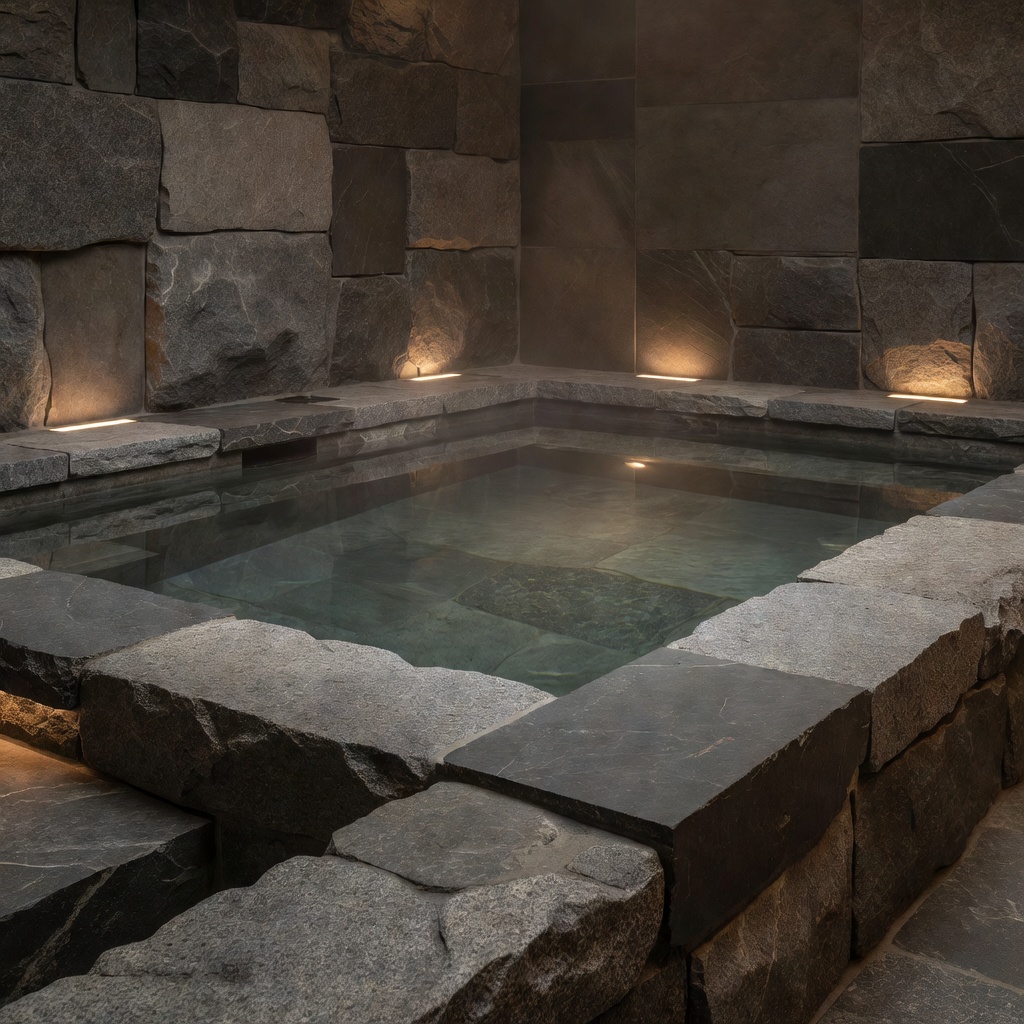
Indoor bathing pool with stone surrounds and subdued lighting
Bathing-setting reference · source and property facilities are not inferred from this photograph.

Rest is a facility too

Count the places where you would happily spend half an hour without being in the water. Comfortable seating, quiet, drinking water and an intelligible layout can matter more than another named pool.

For a crowded-weather day, indoor space is not a secondary detail. It is the difference between a usable retreat and a timetable of queues.

The room should support the ritual

Assess the path between room and bathing area. A warm internal connection can make repeated short visits effortless. A route requiring outdoor clothing, a shuttle or a public street may still work well, but it changes the rhythm. Ask whether robes, towels and suitable footwear are included or hired separately.

Then consider the hours around the bath. Does breakfast finish before the quietest pool period? Can dinner be booked after an unhurried evening session? Is there somewhere to dry swimwear without making the bedroom uncomfortable? These details are less photogenic than a panoramic basin, but they shape every day of the stay.

Sleep deserves its own check. Room position, blackout, ventilation and adjacent activity may be more important than decorative materials. Request a quiet location where possible and understand that it is a request unless explicitly guaranteed. A premium price should buy clarity about the experience, not merely an appealing vocabulary.

A concise facility audit

Before paying, record the water origin, included zones, opening hours, re-entry rules, dress requirements and the route from room to bath. Add any accessibility needs and the facility’s specific response. If one answer is missing, ask again before allowing the scenery to settle the decision.

For broader bathing-water operational context, the World Health Organization’s guidance on swimming pools and similar environments explains why water management matters. It is not a hotel certification or a personalised health recommendation.

Official research starting points

Next: put the circuit into the right season →